Overview
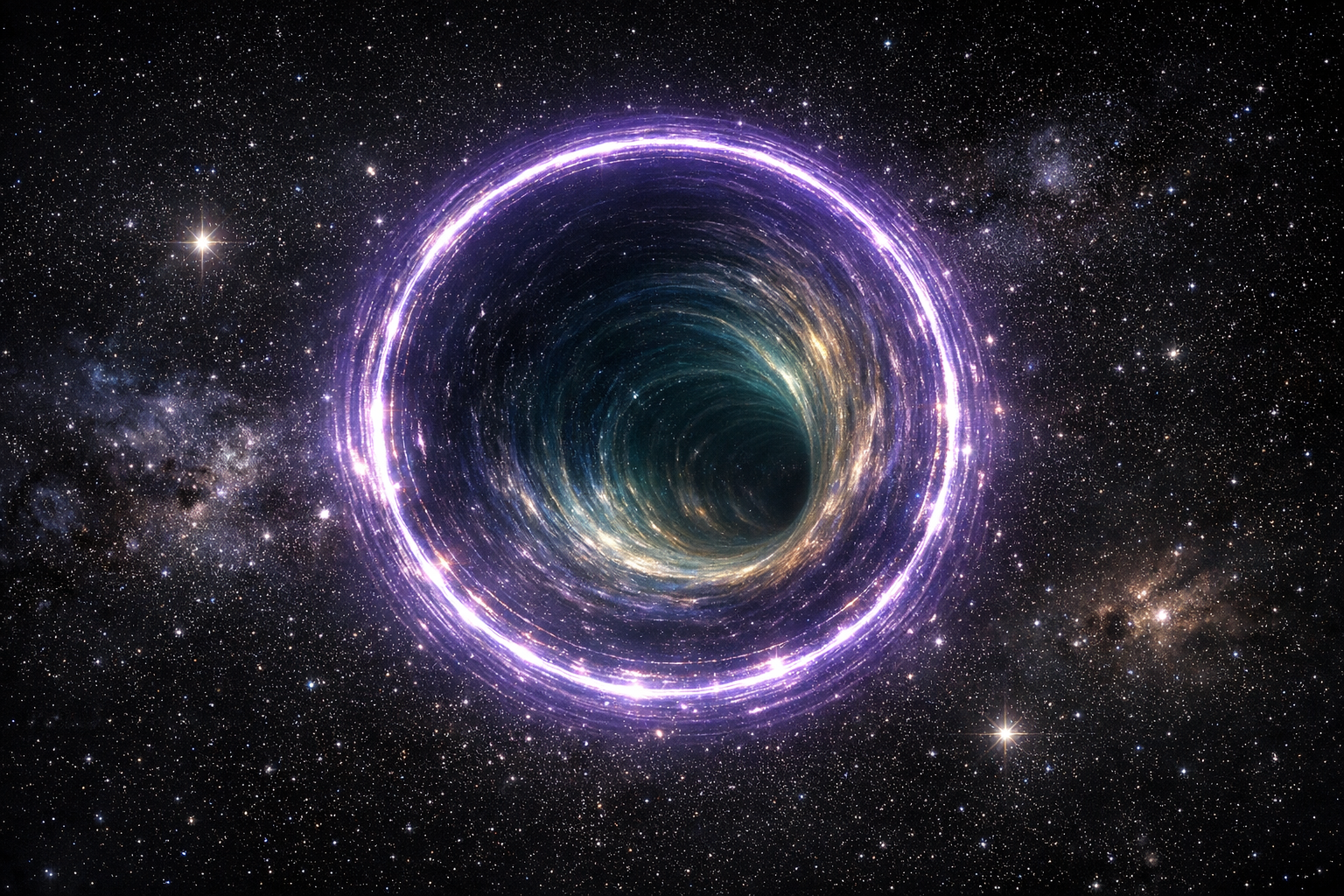
Null-Spindles remain the most tantalising and least understood phenomenon in contemporary astrophysics. Gamaen science formally designates them as Type-Ω spatial singularities — hypothetical stable wormholes capable of linking distant regions of space-time through controlled distortions of the Harmonic Field.
To date, no active, documented Null-Spindle has been observed or traversed by Republic vessels. The sole contemporary evidence is the 2082 Odysseus Incident: the UDF deep-space vessel Odysseus vanished from the Sol System, Milky Way Galaxy, after encountering an uncharted gravitational distortion and re-emerged, severely damaged, in the space between the Kaleph and Gamaeth systems. Survivors described a violent spatial transit that defies conventional FTL models.
Whether this event was the result of a natural rifthale or something engineered remains classified speculation.
Scientific Foundation
Theoretical models, refined at the Orran Institute since the Odysseus arrival, treat Null-Spindles as phase-locked standing waves anchored by paired nodes (Node Entry/Exit Universal Singularities). In principle:
- Entry and exit mouths would potentially manifest as a muted but shimmering lens, 200–800 metres across.
- Internal geometry would compress extra-dimensional space, producing extreme but mathematically predictable time dilation and curvature.
- Stabilization would require harmonic anchoring — resonance patterns coherent enough to prevent collapse.
Natural formation remains possible but vanishingly rare; many theorists now lean toward artificial origin, citing the precise gravitational signatures recorded during the Odysseus transit. Frontier sensor logs from the Arqon Abyss and Jiorto Sector occasionally detect transient “rifthales” — short-lived, unstable cousins that flicker like faulty circuitry in the fabric of reality. These are dismissed by most respectable institutes as sensor ghosts or natural gravitational turbulence.
Cultural & Mythic Echoes
Among the Kodon Order, Null-Spindles are spoken of in hushed maxims as vows between realities — promises that cannot be forced, only answered. Raiku monks meditate on the possibility that such phenomena test the balance of those who approach them.
Patisi guilds trade whispered star-charts marked with “ghost folds,” while independent settlers in the outer systems swap tales of ships that simply … folded. Official Republic doctrine maintains strict neutrality: the anomalies are theoretical until proven otherwise. Yet every deep-space navigator knows the unofficial addendum:
“If you ever feel the stars bend wrong, do not accelerate. Listen first.”
Known Evidence (as of 2090)
Odysseus Transit (2082)
Single confirmed passage. Residual psionic and gravitational echoes detected near the emergence point continue to intrigue GMIB analysts and Orran scientists. An additional intrigue in the case of the Odysseus is the reported presence of a large and sophisticated vessel of unknown origin, referred to by the humans as “Crucible”.
Arqon Abyss Anomalies
Persistent low-level gravitational distortions reported by Talaseer settlers and long-range Vannix arrays. No visual confirmation.
No Republic expedition has yet located a stable Null-Spindle. The Aletheia prototype, currently undergoing final trials in the Kaleph system, carries experimental cosmic anomaly scanners precisely for this purpose.
Strategic Implications
Should a verifiable Null-Spindle be discovered and stabilized, the consequences would reshape galactic civilisation:
- Instantaneous travel across previously insurmountable distances.
- New frontiers for colonisation and resource exploitation.
- Profound questions about the intelligence — natural or artificial — capable of engineering such architecture.
Until that day, Null-Spindles exist in the liminal space between hard data and frontier myth: a scar in the records of 2082, a promise written in gravitational whispers, and a challenge to every explorer who dares look beyond the mapped stars.
— Excerpt from the Cosmicforge Lexicon (public edition, 2090)
Compiled by the Orran Institute with contributions from GMIB Strategic Analysis. Subject to revision upon new empirical evidence.